Attention CEO Anis Bennaceur on why filling the CRM beat AI sales coaching, how AI fills every Salesforce field, and why he caps his team's AI token spend.

Sales teams will pay to have their CRM filled automatically long before they pay for AI coaching, because an empty CRM is a daily pain and coaching is a nice-to-have. That is the lesson Anis Bennaceur, co-founder and CEO of Attention, shared on Episode 45 of Built This Week. Attention is a Series B startup of about 70 people that captures sales conversations, fills every CRM field and suggests next best actions for companies like Scale AI, Lovable and Bamboo HR.
Anis had just open sourced a dialed-down version of Attention's sales coaching stack, so Sam spent a day building on top of it. The open source tool scores sales conversations one at a time. Sam's addition took the whole pipeline and ran a Monte Carlo forecast, 10,000 trials, to put the AI's forecast head to head with what the team committed in the CRM.
On fake data, the dashboard showed an AI forecast of $1,170,000 against $1,440,000 committed. Sam could click into individual deals, such as one flagged as strong until a board-level vendor risk review was introduced two weeks earlier. It also scored a live call between a rep and a prospect, giving the rep 67 out of 100, and modeled scenarios like a macro downturn or a big deal falling through. Sam was upfront that it was a demo and asked Anis to pick it apart. The build is written up as our Monte Carlo pipeline forecast dashboard.

Watch Anis Bennaceur on Attention's pivot in Episode 45 (starts at 8:02) · Episode 45 notes and transcript
Anis says Attention had never tried Monte Carlo simulation for forecasting. He liked that the AI forecast landed fairly close to the CRM commit, which he says is what most companies see. His notes: label deals with sales terms like commit or best case, and make the feedback sound less AI-written. He had also released a humanizer for that, and updated it the same day just by telling it to write like Paul Graham.
His bigger point was that forecasting is only half of what sales leaders care about. The other half is what to do about it. If the final decision maker on an at-risk deal is a CRO or VP of revenue nobody has talked to, the rep needs to multithread the deal and reach out, even if the odds of a reply are low. Reps generally don't. Give them a button that drafts the message so they only review and send, and you move from forecasting to actually improving the forecast.
Anis's previous company was bootstrapped, so every deal mattered. His first idea for Attention was a real-time coach that listened to sales calls and told the seller what to say, like a GPS. He says Attention was one of the first companies doing real-time coaching on live conversations. The plan was "come for the coaching and stay for the productivity."
It didn't work. Within a few weeks users stopped caring about the coaching, and buyers would not pay for it right after the ZIRP era ended. Over lunch, another founder told him to flip it: come for the productivity, stay for the coaching. Someone else put it more sharply:
Coaching is a vitamin. People wanna buy painkillers, and the biggest painkiller was actually filling the CRM.
— Anis Bennaceur, Episode 45
When Anis told an investor at dinner that Attention had pivoted to auto-filling the CRM, the investor said it was going to be a billion dollar company. In hindsight it was obvious to Anis: at his last company, the CRM was never filled.
The first version was simple: record calls, fill Salesforce automatically (later HubSpot too) and write the follow-up email after each call. Anis says he used that product multiple times a day and loved it, while he never really used the real-time coaching. His takeaway is that if you build something that is very useful to you, it is likely to be useful to others.
From there Attention added more inputs, including emails, chat and Slack messages. It kept its focus narrow on sales instead of doing horizontal things, and Anis says it was the first company in 2023 able to analyze thousands of conversations at once. In 2024 it started serving that information where people need it, in Slack, email reports to leadership and the CRM. Today a proactive section tells each rep the next best actions for their deals.
Anis says buyers still come in with the same pain: the CRM is always empty, which makes any report a nightmare. He recently pitched one of the fastest-growing AI scale-ups in Silicon Valley, covered agents and much more, and the buyer's reaction was to the fact that Attention can fill their Salesforce.
The key is that it is not just a summary, which misses a lot. Attention fills every field. If an SDR cold calls a prospect who says they are in contract with a competitor for six more months, the chance the SDR logs that is close to zero. Attention captures it and fills the renewal date, along with things like tech stack or spending habits. Anis says the team spent more than three years handling the errors and edge cases. He has also seen buyers who switched to AI-native CRMs hate them and move back to Salesforce or HubSpot when a new revenue leader arrived, which is why Attention does not want to build a CRM.
Sam raised the news that Uber capped employee AI spending after blowing through its budget in four months, a topic we had been debating ourselves since we want our engineers to have close to unlimited access. Anis agreed with Uber, and explained why with a story from 2025, when he looked at how his engineers used Cursor:
And I noticed something really interesting, right, which was the people who were actually spending the most money on AI on Cursor were either the bottom engineers or some of the top engineers and no one in the middle.
— Anis Bennaceur, Episode 45
Attention now uses a two by two of judgment and how AI-advanced someone is. Bad judgment plus heavy AI use produces slop and a fifteenth useless dashboard. Good judgment plus heavy AI use builds the machine that builds the machine. So most people are capped at a few hundred dollars on top of their normal Claude usage, and top people get unlimited spend. Requests for more go to Anis or his co-founder.
Jordan wasn't sure he agreed. He has seen top developers who use few tokens, and he says nobody, including the labs, knows the true cost of tokens yet. Codex computer use drove a spend spike for us that took two and a half weeks to trace, and Sam added that unclear billing dashboards made it slow every time.
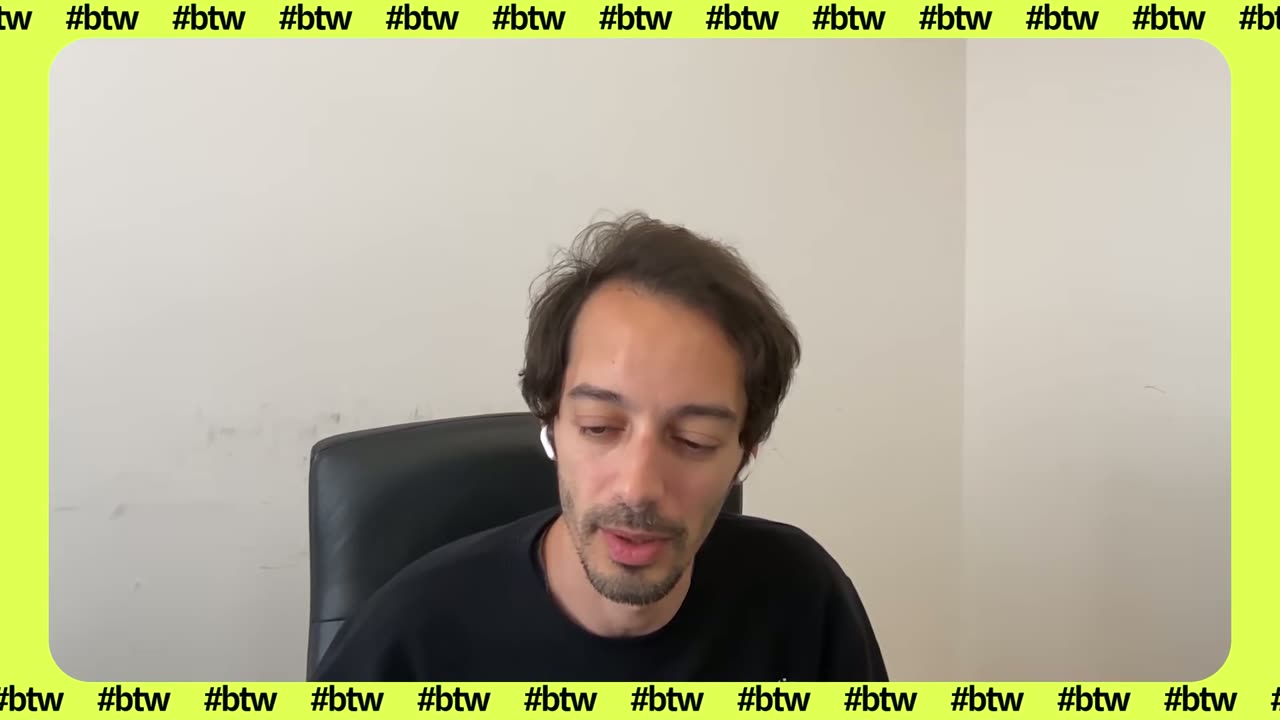
Anis separates two kinds of spend. For the product itself, Attention built tracking of LLM cost per client, per feature and per feature per client, which let it choose models by latency and intelligence. For internal operations, the caps do the work. His last piece of advice:
The reality is in lot of cases, workflows, just deterministic workflows tend to work as well, if not better, than stochastic agents.
— Anis Bennaceur, Episode 45
Step-by-step workflows may still call an LLM, but they skip the heavy thinking agents do. Jordan agreed: every time he starts with an agent SDK from OpenAI or Claude, he ends up with a deterministic workflow and classic LLM API calls, and he has not found a use for the agent SDK beyond building agent-style tools.
Sam's Monte Carlo demo, Anis's pivot story and the token budget debate are all on camera. Watch Episode 45 of Built This Week, where the full transcript is also on the page. To try the product, visit Attention, read more about Anis Bennaceur, or see how other guests use AI in sales.