Jordan built a two-deck AI DJ mixer on Strudel, the JavaScript live coding library, mostly with Codex. Plus a Claude CFO dashboard from a 57-page filing.
Yes, you can build an AI-powered DJ mixer that writes beats in code. On Episode 11 of Built This Week, Jordan Metzner showed a two-deck mixer he built on Strudel, a JavaScript live coding library for music, where an AI button writes a new version of a beat on every press. He built most of it with OpenAI Codex, and we also showed how Claude turns a 57-page financial filing into a CFO dashboard.
Jordan found Strudel while scrolling TikTok, where people were making music with code. It is a JavaScript library for music composition, built off another library, and he had never heard of it before. What he likes: the language is easy to read and edit, it lets you change music in real time, and LLMs are great at writing code like it.
Strudel also has an active online community. Jordan played a cover of Charli XCX's 360 made in Strudel and walked through the code: a lead synth, an arrangement of notes that runs through several times, a vocal sample at the start, a sawtooth sound and a bass section. When he changed the intro notes to a single note and pressed play, the song came out flat, which shows how directly the code maps to the sound.

Watch Jordan's Strudel AI DJ mixer in Episode 11 (starts at 5:08) · Episode 11 notes and transcript
Jordan has been DJing since he got turntables as a kid, around 10 or 12, and uses Ableton Live to produce music. He wanted something like Algoriddim djay Pro 2 combined with Ableton. The result, which he simply calls Strudel, is a two-deck mixer: you crossfade between deck one and deck two, each deck has multiple channels with an A/B sub-channel mixer, and there are master effects and synchronization.
Every channel runs on Strudel code, and the AI button writes new beats. In the demo he generated some techno, raised the delay on the drums, mixed from channel A to a channel with no drums, then hit the AI button on the drums repeatedly. Each press gave a different version and changed the sounds it used, and you can apply that across the whole stack to make the song sound different. He said up front it might be a little buggy.
I could have never built something so dynamic, so progressive without the use of LLMs. This would have been a very, very heavy and expensive development cycle to build something so complex.
— Jordan Metzner, Episode 11
He first said he used mostly Claude, then corrected himself: it was mostly OpenAI Codex. We have used Suno to make music before, and he sees this as another type of music production built on LLMs, JavaScript and React.
Sam Nadler says this is what he loves about AI: it gives people access to complex crafts that would take years or decades to master, and lets them have an impact quickly. He admits there is still a learning curve. He isn't familiar with mixing music and the mixer looked complicated to him, but he thinks he could build himself a basic version in a couple of hours, and learn how mixing works along the way.
If you're willing to spend a few hours and work with the tools that are available, it's pretty amazing.
— Sam Nadler, Episode 11
Jordan connected it to earlier episodes: Google's Veo 3 and its impact on video and Hollywood, and Nano Banana and its impact on Photoshop and image design, which we covered the week before in Episode 10. Now LLMs are reaching music production. He expects LLMs to keep affecting the creative arts whether people like it or not, and hopes it creates a whole new wave of creative artists.

This is a use case we rely on almost daily. You give Claude a CSV, a spreadsheet or a PDF, and it builds a cohesive dashboard. Jordan gave it Google's latest financial filing, which he thinks was the 10-K, a 57-page PDF, and asked for something simple: a dashboard as if he were a CFO after reading the document.
Claude returned an executive summary plus a dashboard showing $96 billion in revenue and $28 billion in net income for the quarter, a breakdown of where the revenue comes from, operating expenses by segment, free cash flow, employees and the balance sheet. It also flagged a settlement liability charge tied to privacy concerns and other risks. Jordan said he didn't read the document but knew how Google was doing just from the dashboard.
In prep, we ran the same document through other LLMs. Sam says OpenAI's result wasn't nearly as good: the summary was pretty good but too much to read, there was no immediate visual, and it took a couple more prompts to get four graphs. Day to day, Sam says, we do this with QuickBooks and other data from our own businesses instead of maintaining a dashboard. Jordan likes that it is disposable:
It's almost like a throwaway tool. I'll use it once, I'll check out the dashboard, I'll look at it, and, next time I wanna make a dashboard, I'll just make a new dashboard.
— Jordan Metzner, Episode 11
For us, at the time of this episode, yes. Sam noted that a week or two earlier we had been praising Claude Code and its multiple agents, and now our engineers were switching to Codex. Jordan says we keep switching: from ChatGPT to Cursor to Claude Code to Codex. He tried Codex a few months earlier and found it highly underdeveloped, a pretty poor experience. Over Labor Day weekend he saw people talking about it, gave it a test run, and it built the majority of his DJ tool.
He says the team is moving to Codex because it is the best model they have found on the market today, but that may change tomorrow. He wouldn't bet on what our workflow will look like by the end of the year, because he thinks it will change many more times. He also mentioned that Alex, a Cursor-style tool for Xcode and Swift apps, was joining OpenAI's Codex team. For our later take on the two tools, see Claude Code vs OpenAI Codex.
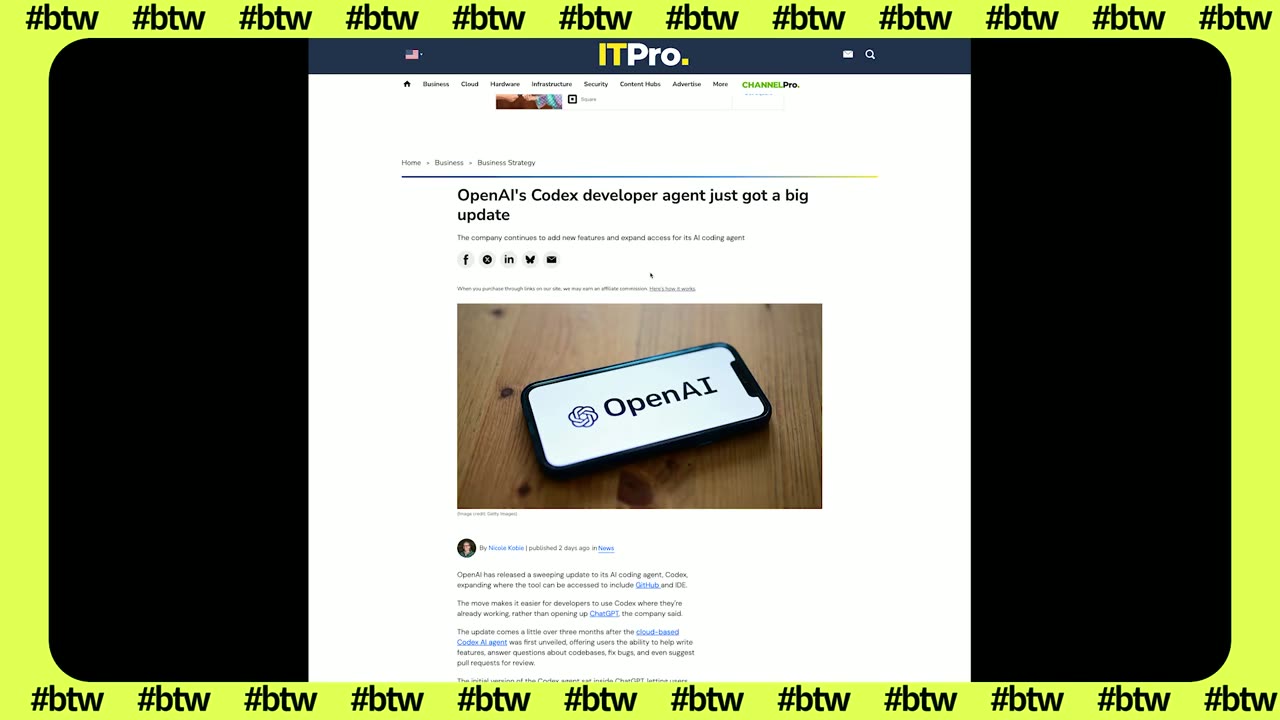
Jordan says OpenAI paid $1.1 billion for Statsig, a tool for A/B testing, feature flags and similar optimizations, which OpenAI itself was already using to test its product. He expects some of the Statsig team to move into product roles at OpenAI and called it inning one or two, with many more deals to come. Sam's read is that OpenAI has captured consumers but trails in enterprise adoption, with Anthropic leading the code race so far, so it makes sense to prioritize enterprise, where the most money will be spent.
Jordan recalled a prediction he attributed to Dario Amodei that 90% of code would be written by AI by around the end of the year, and said his own code is almost 100% AI-written. He finds it surprising that Microsoft, Amazon and Google, with their clouds, haven't produced the best coding tools yet, but wouldn't count them out.
Sam recalled a Wall Street Journal article about AI's impact at around 500 enterprises, where the response seemed lackluster and the biggest impact was in back office operations. Jordan thinks some startups overpromised, betting the models would improve fast enough to deliver. He agrees back office is where AI works well: he says they have automated almost their entire invoicing with AI, and coding is probably number one. He expects every function, from HR and marketing to recruiting, sales and finance, to be affected.
Sam passed on something he heard secondhand and flagged that he hadn't read it himself: executive teams want AI everywhere and see the cost savings, but people in the trenches show some resistance. He thinks that lasts until the culture around working with AI changes. Jordan's answer: all change is scary, and AI may be the biggest cultural change organizations have seen in a long time.
Hear the AI button change the beat live, and see the full Claude dashboard, in Episode 11 of Built This Week. The episode page also has the full transcript, including our takes on Figma's first earnings since its IPO and Google's antitrust ruling.