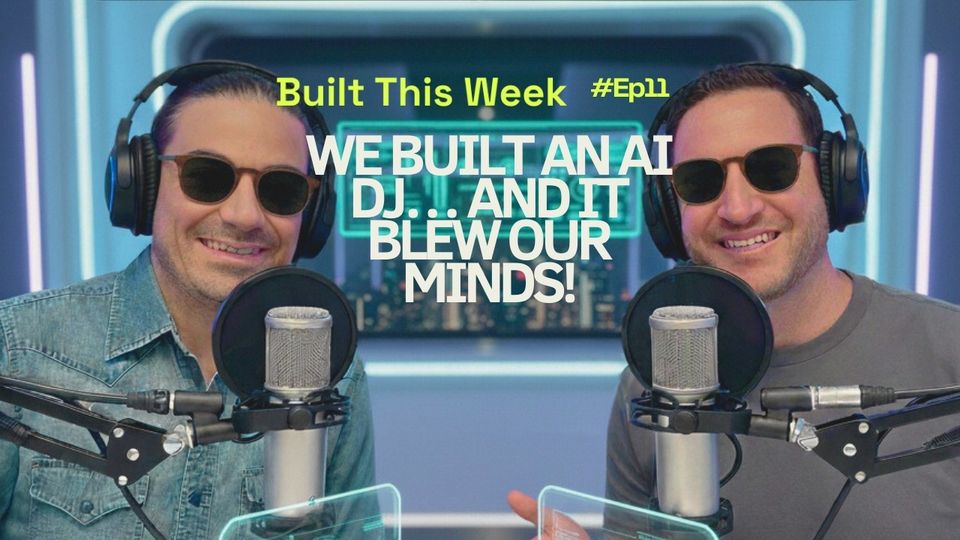
Neurable founder Ramses Alcaide demos headphones that read your focus in real time and speed up a podcast as he concentrates. Plus his ice bath experiment.

Neurable puts brain sensors inside everyday headphones and uses AI to turn that brain data into something useful, like a live measure of your focus. On Episode 41 of Built This Week, founder Ramses Alcaide demoed it on camera: a browser plug-in he coded in a few hours sped up a podcast when he concentrated and slowed it down when he got distracted. He says the technology was stuck in the lab since the eighties, and Neurable's AI is what makes it work in headphones, earbuds and AR glasses.
Ramses Alcaide describes a brain-computer interface as a wearable device that helps you better understand your brain and control different devices. The headphones he wore on the show have sensors on the inside that record his brain activity. Sensors like these are typically used in labs to track things like epilepsy or sleep disorders, but he says they can be used for much more, from tracking disease states to helping you focus.
Sam asked whether Neurable's approach is noninvasive, unlike some other players in the space. Ramses confirmed it: no surgery, and you can take it off any time you want. The hard part, he says, is taking a complex brain signal and turning it into something useful for people.
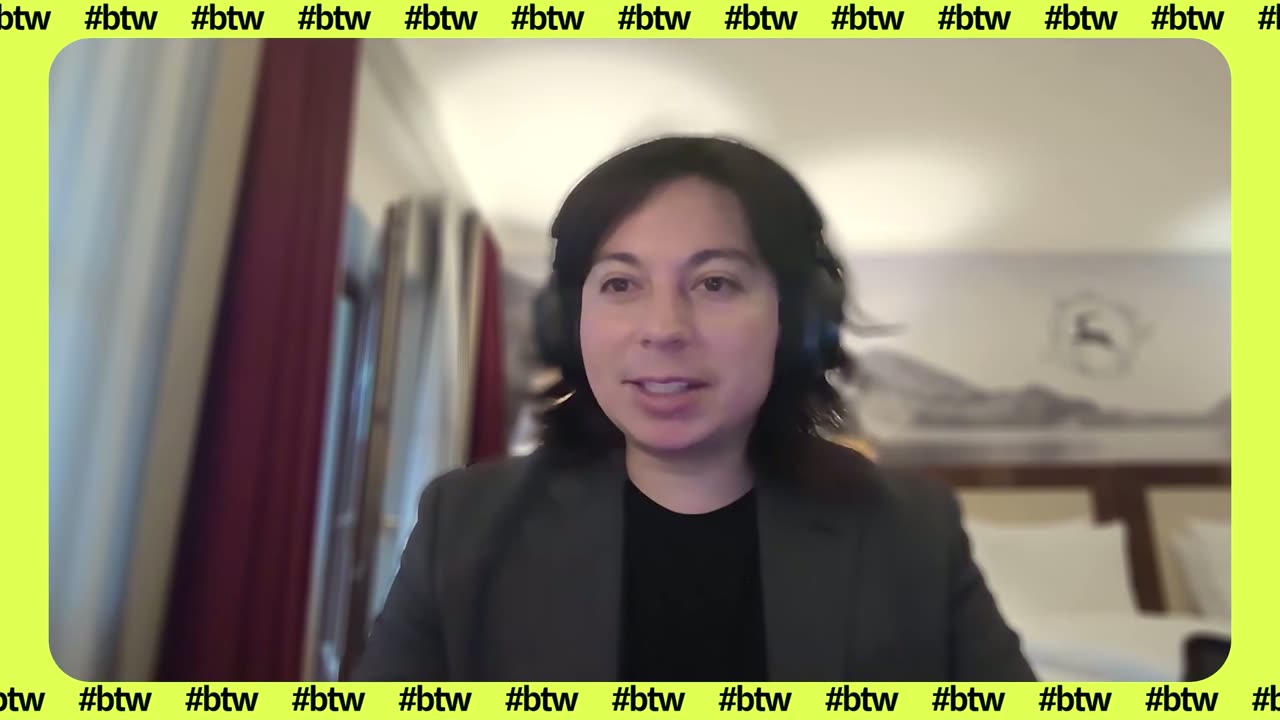

Watch Ramses Alcaide's live focus demo in Episode 41 (starts at 2:34) · Episode 41 notes and transcript
Yes, and Ramses showed it live. He shared his screen with a podcast playing and a blue bar scrolling underneath: his focus, in real time. As he concentrated, the bar rose. When he let himself get distracted, it dropped. When Sam joked that Jordan listens to podcasts at 2.5x, Ramses pointed out that the joke had just dropped his focus.
Then he turned on a feature in a browser plug-in he built. He listens to podcasts at about 2x and often misses key parts when his attention drifts, so the plug-in sets playback speed based on how focused he is. While he concentrated, the speed climbed to 1.72x. When he got distracted, it slowed down. He says he whipped it up by coding it in a few hours.
Jordan confirmed this all came from the headset on his ears. Ramses says the headset is on the market, with an app that tracks brain health and focus, and can change the sound you are listening to when you drift off task.
Ramses says the consumer product has two main use cases. The first is focus and breaks. He showed data from someone reading a book for an hour and a half, with focus high for long stretches and then a dip.
When you feel tired, that's actually your body that's tired. Your brain has been tired sometimes for hours beforehand, and we can detect when that brain is getting tired
— Ramses Alcaide, Episode 41
If you skip the break, he says, you slowly burn out. If you take it, you get a boost in performance that he compared to coffee without the caffeine. The app can also detect when you are getting distracted. A button called biofeedback changes the audio when that happens, and he says it has kept people in medium to high focus consistently.
The second use case is brain health: how much cognitive strain you are under, your mental readiness for the day, and even the age of your brain. If your brain looks like it is aging faster, he says, that might be a reason to get an MRI or see a doctor. Other brain and health uses of AI that came up on the show are on our AI in healthcare page.
Ramses says Neurable released a system with HP at CES that is meant to help you overclock your brain while gaming, with the goal of cutting fifty to one hundred milliseconds. He shared a Tom's Guide post by a reporter who tried a feature called Prime, which he says helps you accelerate your brain. According to the post, the reporter cut 100 milliseconds off his gaming performance. Jordan suggested sports, and Sam suggested surgeons at the end of a long shift. Ramses says a short priming exercise could help in the same way.
He was clear that Neurable does not plan to build every solution itself. The goal is to give the tools to people who know the surgical room or gaming well. For developers, he says there is no SDK as such, but a research kit gives access to the system's data so people can build on top of it, which he calls effectively an SDK with a fancier name. He pointed students to Neurable's Discord, where they share projects.
Ramses got passionate about brain-computer interfaces when he was about eight, after a family member had a tragic accident and needed prosthetics. He wanted to build prosthetics controlled by the brain. That led him to electrical engineering and a PhD in neuroscience, and the first version of Neurable's technology was built in grad school at the University of Michigan.
What rocked his world, he says, was learning that the standard of care for knowing someone has Alzheimer's or Parkinson's comes about ten years into the disease. Bringing lab technology to devices like headphones and earbuds could mean identifying problems sooner. That became the company's mission.
It was to make sure that the performance was high enough that it would actually deliver on the promise of brain computer interfaces.
— Ramses Alcaide, Episode 41
Neurable spent about ten years in research and development, backed by investors and the US Army, before starting to work with consumer brands.
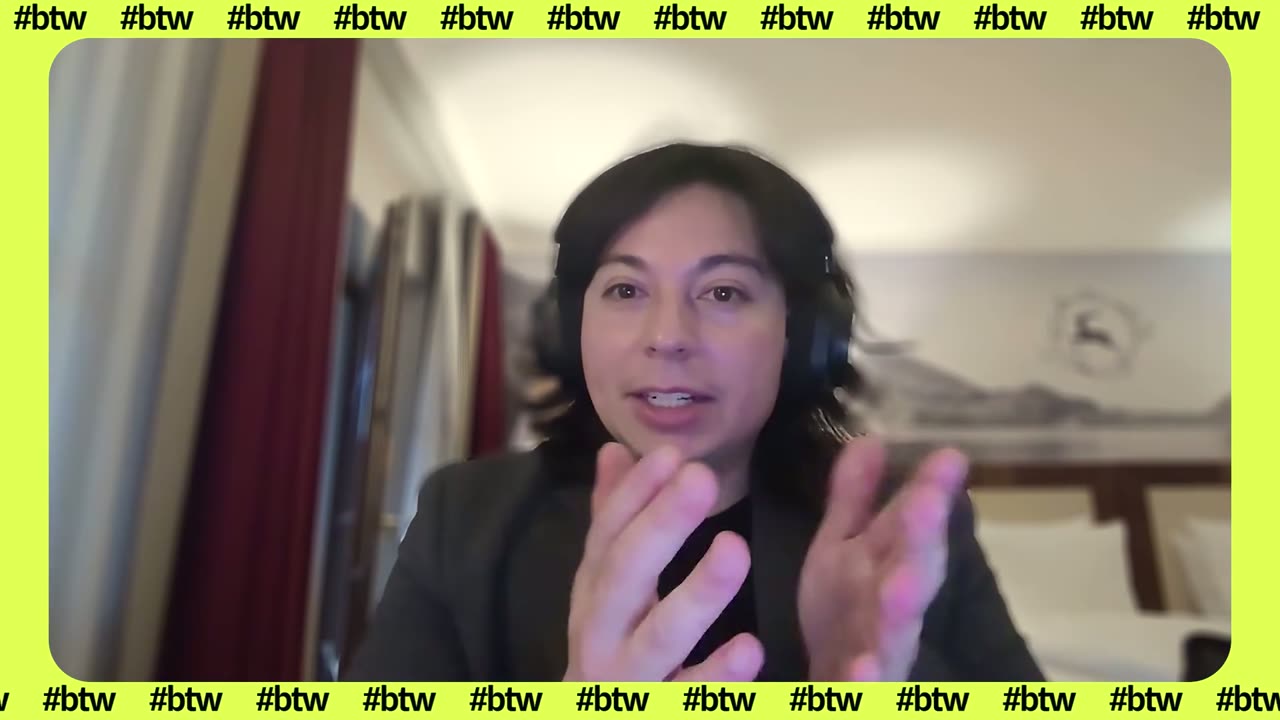
Ramses runs personal experiments that he posts on his Instagram: recording his brain while driving a race car, walking on fire or getting into an ice bath. Sam asked which results surprised him. Ramses told the story of a breakfast before a planned ice bath, when someone mentioned a rumor that women may not get the same benefit from ice baths as men. He wasn't sure he believed it, but he had the tools to test it.
His group ran some women and some men through a cognitive snapshot in the Neurable app. This was an informal test, not a formal study, and he did not share how many people took part. In that group, he says, all the men showed an increase in anxiety resilience, meaning how well you handle stress, which is what you want from an ice bath. All the women showed a reduction.
So we actually saw that, this thing that ended up being a breakfast rumor actually turned out to be more true, and it shows you how wellness solutions may not work equally across individuals.
— Ramses Alcaide, Episode 41
His takeaway is that wellness is a customized thing. Sam's quick reply: maybe they are more of a sauna cohort.
In the news segment we looked at a story about AI security cameras calling brake lights fires and dogs bears. Jordan, who has experience building these systems, explained why it is hard. Cameras sit at the edge on Wi-Fi, often with infrared or radar sensors, and a model on the device or in the cloud has to analyze 15 to 25 frames per second in any environment, since users can point a camera anywhere. It has to be fast enough to send a push notification and cheap enough that nobody pays for a $10,000 camera or a huge monthly subscription.
Ramses says Neurable faces the same trade-offs processing brain data on the edge in its headphones, balancing cost, compute and what to send to the cloud.
your brain is just such an incredible, amazing machine that can classify these things that easily that you take it for granted.
— Ramses Alcaide, Episode 41
We closed on kids beating age verification with a fake mustache. Ramses called it an overfit issue: the model assumes anyone with a mustache must be an adult. Brain data, he says, can track brain age, and some companies are working on turning about two minutes of brain data into a key that can't be replicated.
The focus demo is best seen live, with the bar rising and falling as Ramses talks. Watch Episode 41 of Built This Week, where the full transcript is also on the page.