Jordan used only Claude chat to build a 3D model of how cholesterol medications work. Plus Sam's MakerWorld 3D printing workflow and a Lyft-Waymo surprise.

You can build an interactive 3D medical visualization without writing code by describing it to Claude in a chat and iterating on what it renders. On Episode 13 of Built This Week, Jordan Metzner showed a 3D model of the liver and intestines that shows how cholesterol medications lower LDL, built only by chatting with Claude. Sam Nadler then walked through how he customizes and 3D prints files from MakerWorld.
Jordan has genetically high cholesterol, a common condition. He takes medication for it but, like a lot of people, didn't really know how the drugs work or where in the body they act. He thought it was a good use case for AI, both for patients after a doctor's visit and for medical professionals.
The result is a full three-dimensional model labeled with the liver, enzymes, intestines and blood vessels, with LDL particles floating around. You can rotate it, zoom in and view it from different angles. You can turn on three different cholesterol medications one at a time and raise the dose of the first one. As each medication is added, the LDL dots visibly thin out. Start over and you see how much more LDL there was before.
Jordan suggests a cardiologist could build models like this in real time to show patients how their treatment works. The finished tool is on our 3D cholesterol visualizer build page.

Watch Jordan explain how he built a 3D medical visual with Claude in Episode 13 (starts at 6:08) · Episode 13 notes and transcript
Sam admits he is usually oblivious with anything medical and just trusts his doctor. He thinks a visual like this is a quick way to understand what a medication is meant to do. Because it took Jordan only a short time to build, Sam imagines doctors having a tool like it at hand, so that while prescribing something they could show a quick visual and educate patients about their care plan.
He also wondered which other industries could use visuals like this. Jordan's answer was anything biological or from nature, from birth to how a plant processes photosynthesis. We collect more of our conversations on this topic on the AI in healthcare page.
Jordan wrote no code and used no third party tools. He simply chatted with Claude, which he picked for its rendering:
I'm simply chatting with Claude. I chose Claude because they have a very good web rendering engine.
— Jordan Metzner, Episode 13
He thinks the same request in ChatGPT wouldn't come out nearly as good. His original prompt asked for an animated web tool showing how the different cholesterol medications work, with each one turning on and off. He went back and forth, coaching it until he got the result he wanted. It started as a 2D model, he scaled it up to 3D, and then he added autoplay demos and labels.
Jordan's view is that most people already search Google or ChatGPT for whatever they are prescribed. A custom visual goes one step further, and he thinks it could work for medical professionals in every field.
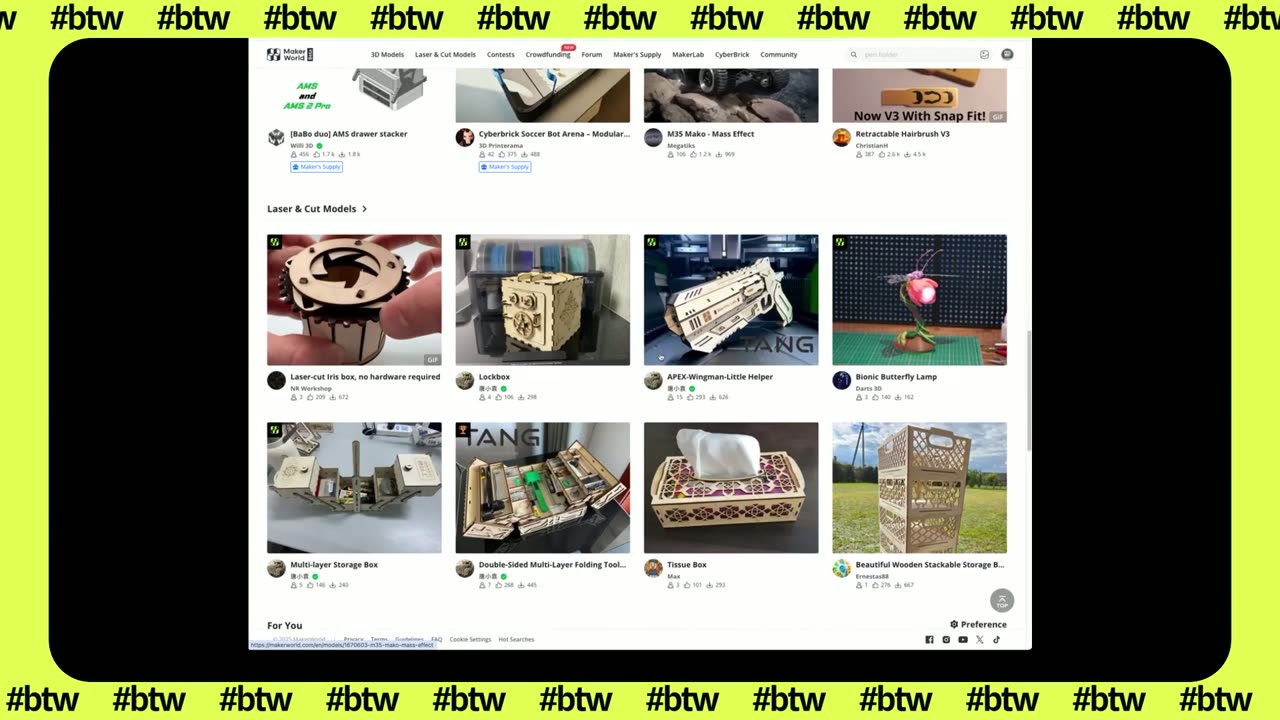
After listeners asked about it, Sam covered our 3D printing setup. We both use a Bambu Lab X1C, and our favorite place to find files is MakerWorld. For the episode Sam printed Built This Week keychains: he found a keychain model, customized the text, clicked generate, waited about a minute, downloaded the file and sent it to print. The steps are on the Built This Week keychains build page.
Sam described a home printer as having your own little factory, able to print shelving, canisters and nearly anything that fits inside the machine. His own prints include fidget tools, ladle holders, cable organizers, small pill canisters for travel and personalized birthday items. He is also printing charms for the small store he is building with his daughter, which we covered in Episode 12. Jordan has printed containers, bowls, a phone holder and a pencil holder for his desk.
Jordan thinks 3D printing still feels early. The machines work well, but:
I think we can both admit that they do require a significant amount of maintenance and upkeep in order to work properly.
— Jordan Metzner, Episode 13
He expects the printers to need less upkeep over time, and imagines connecting AI to 3D models so you can dream up and print whatever you want. Sam says customizing files is one of the harder parts for him. Changing the text on a keychain is easy, but many files are complex, and reworking one is outside his skill set. He hasn't explored existing tools yet, but an AI that could take an existing file and tweak it the way he wanted would excite him.
In the news segment, Jordan reported that Reddit, which earlier did a $60 million deal with Google, is in talks for deeper integration into Google's AI. To him it seems obvious. He finds Reddit a source of truth, especially for reviews of products and services, and thinks that content is critical to LLMs.
Reddit's such a valuable treasure trove of information. I feel like it's real versus, someone's agenda to promote, a certain line of products or whatever.
— Sam Nadler, Episode 13
Sam was curious whether the price of a new deal would rise much above the first one.
Lyft and Waymo signed a deal to offer rides in Nashville. Sam lives in Nashville and used to work at Lyft, and he was surprised. The current Waymo markets he listed, such as Phoenix, Los Angeles and San Francisco, mostly have warm, stable climates. At Lyft he visited the Level 5 autonomous driving facility, and he remembers that weather, construction and other variables have a huge impact on the success of autonomous driving.
Nashville has all four seasons, icy roads and a busy downtown with pedal taverns and people walking everywhere. From his time at Lyft, Sam also knows its ride volume is well below cities like Philadelphia, Miami, Chicago and Dallas. He wonders if the smaller size is the reason it was chosen first. Either way, he welcomes it, and Jordan says we'll see how robotaxis handle markets with more variable climates.
Jordan rotates and zooms the 3D model on screen, and Sam generates and downloads the keychain file live. Watch Episode 13 of Built This Week, where the full transcript is also on the page.