ModelOp CTO Jim Olsen on how Fortune 500s govern AI: cost per use case, finding shadow AI, agents that fill compliance forms, and why model inventory matters.
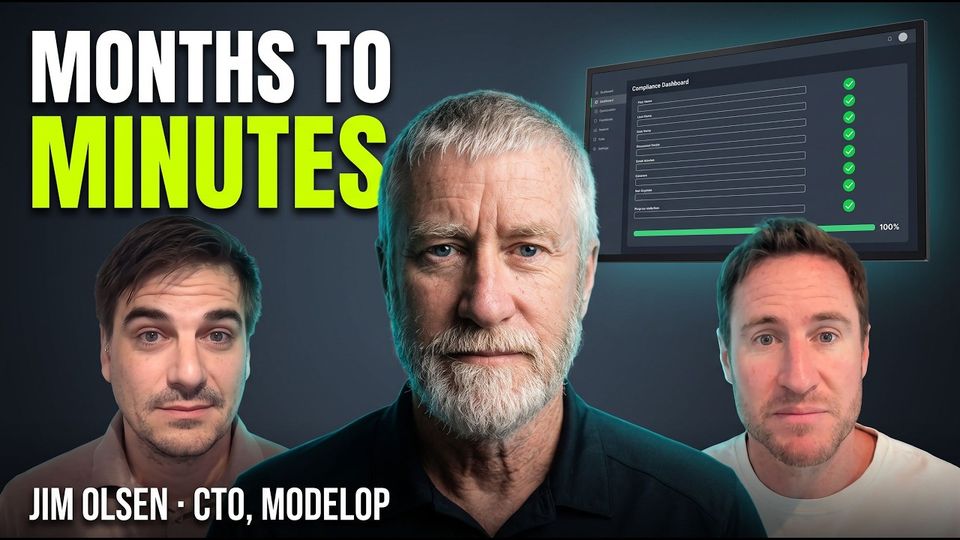
Large enterprises are slow to ship AI because they either have no process for it or so much process that a model takes twelve to sixteen months to get out the door. Jim Olsen, co-founder and CTO of ModelOp, says the fix is governance that drives the work forward: an inventory of every model and use case, cost tracking per use case, and agents that do the compliance paperwork. All of ModelOp's clients are Fortune 500 companies, so he sees what they actually run.
Jim and ModelOp's current CEO were working in big data with customers training AI models more than eight years ago. They saw a gap, built the product, and have kept evolving it as new AI capabilities reach large enterprises.
Sam asked for the explain-like-I'm-five version. Jim's answer: if you are an enterprise putting an AI solution in front of the public, you need to know the risks to your business, your customers and, for many of ModelOp's customers in banking and healthcare, your patients. ModelOp gives companies methods to assess that risk, monitor how models perform for the business, and track what each use case costs. The goal is to automate that process so it stops being a burden. As Jim put it, an idea that takes a year to ship has already expired in this space.
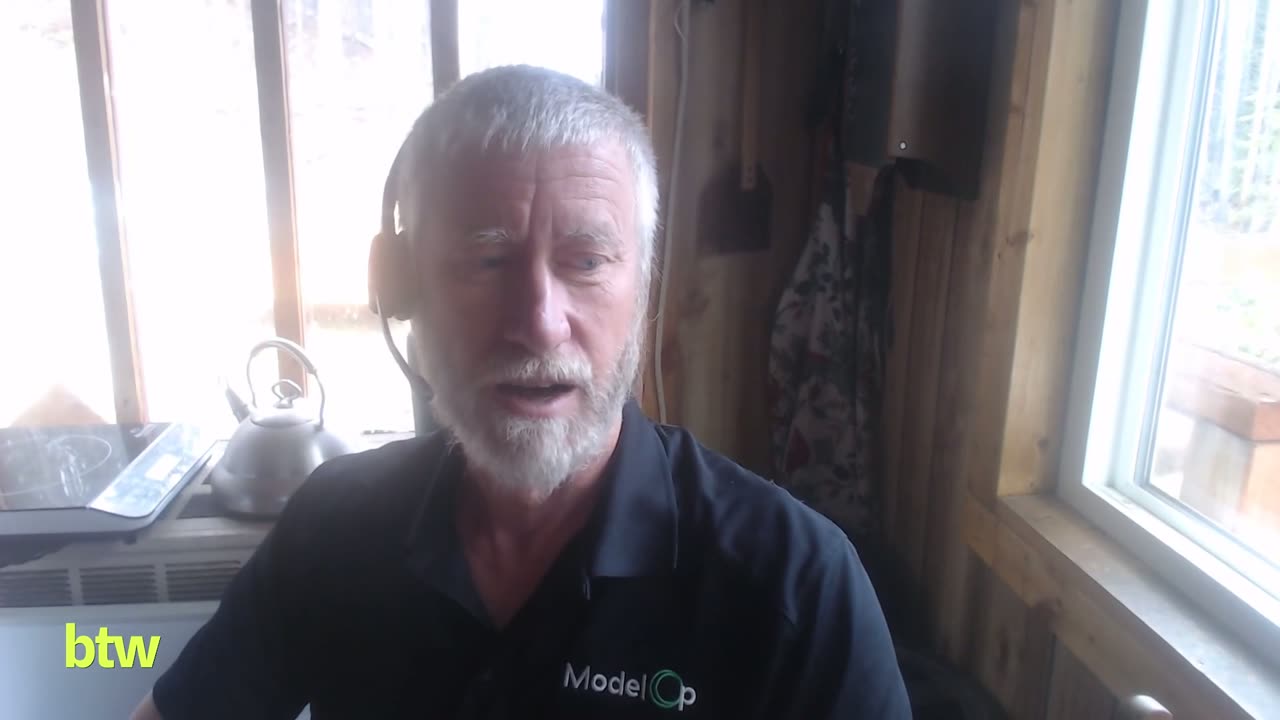

Watch Jim Olsen on AI cost per use case in Episode 55 (starts at 3:28) · Episode 55 notes and transcript
Most token dashboards show usage by model or by user. Jim says neither is useful to the business. A developer using Claude Code to write software is a very different use case from someone using the same model to answer customer questions, so the question to answer is what each solution costs.
In the demo, Jim showed a hypothetical customer support chatbot tracked as a business use case. Its token usage was imported from Kong Gateway, a ModelOp partner, along with guardrail data on blocked requests. ModelOp can also track usage directly, and a dashboard ties cost together across use cases and models. The point is to decide whether something is worth the spend:
Because if it's just like a general HR query tool and it's costing me thousands per month, that might not be worth it.
— Jim Olsen, Episode 55
A critical customer care tool that saves money is a very different cost equation, he said.
ModelOp runs a discovery service that queries enterprise platforms such as Amazon Bedrock, Amazon Quick and Microsoft Copilot, then reconciles what it finds against the existing inventory. Anything unregistered is so-called shadow AI. Jim is not focused on the desktop, since he expects everything to have AI built in eventually. He cares about enterprise-level resources, because those can reach proprietary information.
What is actually being run out there? Microsoft Copilots, there's people developing these within the enterprises all the time on their own, and we don't always know about it.
— Jim Olsen, Episode 55
When a new model is brought in, a configurable life cycle starts. It enforces the company's policies and pushes the process forward instead of sitting back passively. In the demo, the scan found a long list of Copilots, agents and Amazon Quick implementations that had not been registered.
Jim brought one discovered item into the inventory: a healthcare adviser chatbot built in Microsoft Foundry. ModelOp pulled in both the chatbot and the model it uses, GPT-5 mini. The life cycle then asked for documentation, so Jim uploaded a plain-English use case document.
In the background, ModelOp's own agents read the document. Jim described a full agent workforce built on MCP tools and a contextual database that stores what is in the inventory. The agents filled out the use case form, and when Jim moved the process forward, the system compared the answers against the EU AI Act and flagged compliance violations to fix.
Jim says what he walked through would take months of work in some organizations, and ModelOp brings it down to minutes. Sam summed it up as using AI to use AI. Jim agreed, and added that a human stays in the loop.
Jordan asked where the company started. Jim was consulting for large manufacturers and banks in the data lake era, helping them build huge data lakes for training AI models. One manufacturer had hundreds of models running on its machines, critical to the business. Jim found that one of them, deployed to customer sites, was trained in exactly one place: a single employee's desktop.
If this person got hit by a bus, god forbid, tomorrow, they would have no idea how to reproduce it. They had no tracking on it.
— Jim Olsen, Episode 55
There was no record of what went into it and no versioning. Jim says he saw the same thing again and again, with nobody having insight into what was deployed. That is why he believes companies need a process to track models, validate them and stay compliant with regulations.
Jim gave a real example. When one widely used model was suddenly shut down, ModelOp customers had to work out which of their solutions depended on it, because everything using it was broken. With the inventory, they could look it up in reverse, see the model was used by 16 things, and roll those back to a different model quickly.
A shutdown is the extreme case. The everyday version is retirement: when a model like GPT-5 mini goes away, you need to know who is using it, how to upgrade, and how to make sure things still work.
So you have to know what you have, what is using what to even begin that exploration. It's super critical when we get into these rapidly evolving models.
— Jim Olsen, Episode 55
Jim joined us from 10,200 feet in Colorado, miles from the nearest power lines at the end of a dirt road. He runs on six solar arrays feeding lithium iron phosphate batteries, which he says are far better than the lead acid ones he used to have. Starlink gives him about 300 to 400 down and roughly 30 up, and it held up through a hailstorm during the recording. On a normal load, his eight large batteries can run the house for six to seven days with no sun, and he keeps a backup generator he has not needed in a long time.
Governance questions come up across our guests in regulated industries. See how other companies approach AI in finance and healthcare, and our earlier episode on AI compliance training in Episode 20.
Jim's demo shows more than we could fit here, including the cost dashboard and the full compliance life cycle. Watch Episode 55 of Built This Week for the whole conversation and the full transcript.