Collective CEO Hooman Radfar on AI agents for solopreneur bookkeeping and taxes, plus the Gemini cash flow dashboard Jordan built for the episode.

Collective is an online back office built for solopreneurs, and its plan is to run company formation, bookkeeping and taxes with AI agents, then let members plug in more agents for things like insurance or lending. That is how Hooman Radfar, co-founder and CEO of Collective, described it on Episode 14 of Built This Week. Jordan also built a Gemini cash flow dashboard with Collective's members in mind, and Hooman shared why he thinks the AI boom is heading for a cycle.
Hooman Radfar has done startups his whole career. He founded and sold a company, then was a founding partner at a VC firm, where he says he backed over 70 companies. Now he is operating again at Collective.
And the quick and dirty on Collective is we're the first online back office that's specifically purpose built for solopreneurs.
— Hooman Radfar, Episode 14
His pitch is simple. A great designer, developer or marketer does not want to form a company, keep the books, pay themselves or do taxes. Collective's mission is to take those jobs off their plate so they can do the work they love.

Watch Hooman Radfar on Collective's AI agents in Episode 14 (starts at 17:27) · Episode 14 notes and transcript
Jordan is not a Collective user, so he asked Hooman for a few feature ideas and built them. Because he had no access to real member data, his dashboard lets you upload a P&L and a balance sheet. You then set an outlook for revenue, expenses and owner salary (up, flat or down), and the app projects next month, next quarter and next year. He tested it on three made-up businesses under a "Built This Week Holdings" company.
Jordan first tried a 120b model on Groq, but there was too much data in the financial statements for it. He moved to Gemini, which could take it all in. Gemini also powers an insurance compliance check that reviews your policies and flags gaps, such as a lapsed workers' comp policy, plus a loan eligibility and risk report and an overall AI insights view.
On the stack, Jordan built the first version in Bolt to get something up quickly, then moved into Cursor and used OpenAI's Codex to wire up the front end and APIs. He likes Vite React with shadcn and Tailwind because they are responsive and look good. As a bonus he built a Make It Rain game in Bolt with Three.js, where you collect falling money against a timer.
Hooman says people, even on his own team, still don't grasp how fast you can get to a prototype now. The open question for him is the last mile. One of his fellow founders' favorite complaints about Lovable is that it is great for setting up ideas, but moving into production is hard, so they switch to Cursor. He asked whether these tools will be "toy factories" for a while.
Jordan pointed to Replit as a tool that already goes end to end, from an idea in chat to an app that works in the browser, and expects Bolt and Lovable to build something similar. With Figma, Google's Firebase, Amazon's Amplify and Vercel's v0 all coming at the same problem, he expects multiple winners.
Hooman says 38% of the US workforce are solopreneurs, generating $1.4 trillion in revenue, and that the same thing is happening worldwide. He sees AI as a massive tailwind for that group, pointing to the race to build the first billion dollar business of one.

The gap Collective saw: solopreneurs either chain together DIY tools like QuickBooks, Gusto and LegalZoom, or they work with accounting and tax firms. Collective wants to be one application at a subscription price, like having a CFO in the pocket of 27 million Americans. Today it focuses on higher income solopreneurs, the 5.5 million who earn over $100,000 a year and can benefit from an S corp election. Hooman says Collective saves its members $10,000 a year on average.
Hooman says Collective started with AI internally. Members want efficient, bundled service at a lower price, so the team asks whether tasks like account categorization or reconciliation can be done with an agentic, automated approach that gives a consistent result every time. They benchmark each service flow for time and cost, then work through them in rank order. He says it is a very methodical process.
On the member side, Collective replaced its help center with an AI tool for basic questions, and is rolling out features that let members ask about their own account, such as recent spending or upcoming quarterly taxes. The internal agent infrastructure will power a member-facing super agent that can ask the accounting agent about the books, or an agent Collective wrapped around Gusto. He noted that Gusto doesn't have MCP, so Collective built an internal gateway.
The bigger vision is a marketplace of financial agents, the way Shopify and Salesforce created marketplaces for apps.
So Effectively Collective is a tool to discover, provision, and securely provide access to your data to these agents, just like you would an employee.
— Hooman Radfar, Episode 14
When a member is done with an agent, they can decommission it and restrict its access. For developers, Hooman sees this as distribution with zero acquisition cost: with permission, an agent could get a member's tax and financial information in one step, for example to underwrite a mortgage. We cover more on this topic on our AI in finance page.

Jordan opened the news segment with Nvidia's announced $100 billion investment in OpenAI. Hooman sees two schools of thought. One believes this wave reaches superintelligence, so heavy losses don't matter. The other expects a normal cycle with overinvestment and a contraction. He is in the second camp and does not expect superintelligence in the next two to five years, while saying he is open to being wrong. Sam agreed.
Part of his concern is deal structure. He compared some of today's deals to the round tripping AOL did in the dot-com era, where investments came back as revenue. With capital this concentrated, he thinks a slowdown would feel like hitting a wall, and would hit the startup ecosystem hardest.
Jordan argued the other side: as businesses go from zero Nvidia chips to a few each, and AI video improves, Nvidia could be undervalued. Hooman's counter was that people said the same about Intel before it was commoditized, though he made clear he is not betting against Nvidia.
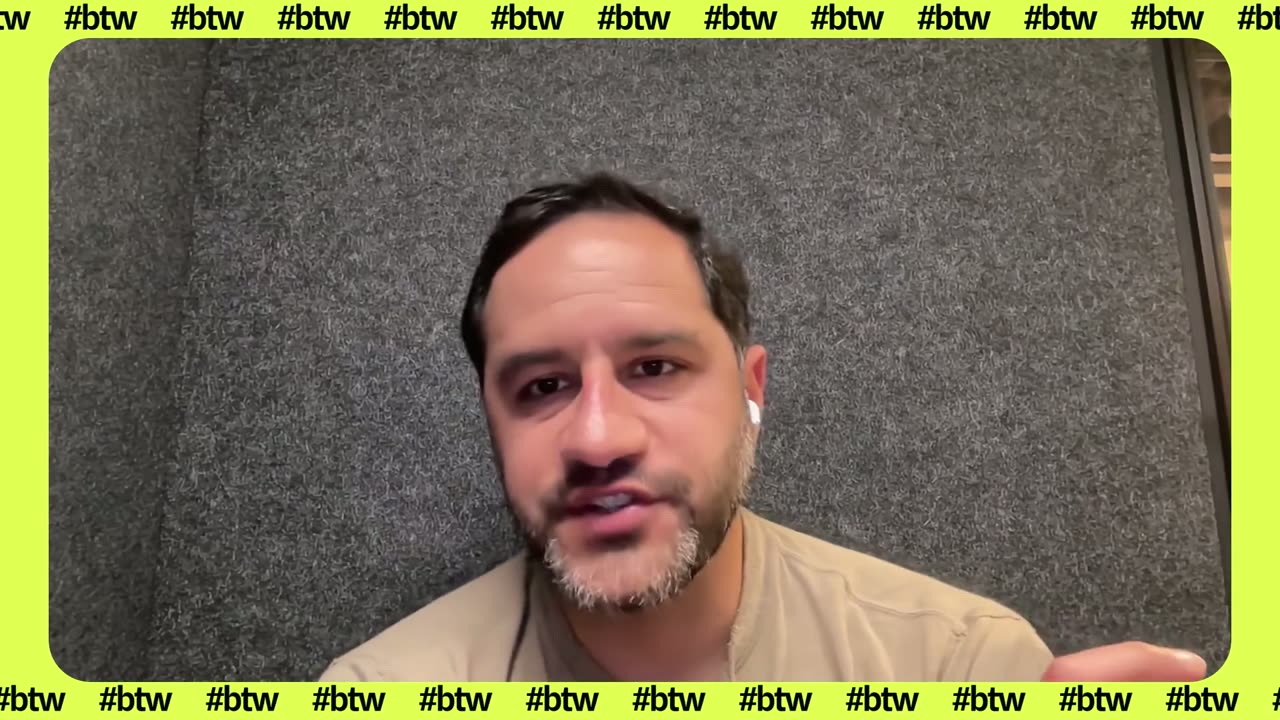
Hooman's view is that many AI products are not a new kind of growth, just underpriced. He compared them to the on demand era:
If I offer you Sam a dollar for 50¢, you're gonna be like, alright. Sure. I'll take that deal.
— Hooman Radfar, Episode 14
He says these companies are betting compute gets cheaper before venture money runs out, and they sit on foundation model companies that will face their own margin pressure. If OpenAI raises prices, a tool like Cursor has to either charge more or eat the margin. Jordan agreed and pushed it further:
But the switching costs here are zero. All of these have zero switching costs.
— Jordan Metzner, Episode 14
Jordan said his engineering teams moved from Cursor with Anthropic models to Claude Code to OpenAI's Codex in about twelve weeks, and will switch again if something better and cheaper appears. Hooman says Collective is in a safer spot: the big labs are fighting over foundation models and code, while his incumbent is Intuit.
Hooman walks through the Collective agent marketplace and his AI market thesis in more detail, and Jordan demos the dashboard and the Make It Rain game. Watch Episode 14 of Built This Week, where the full transcript is also on the page.