Ex-Google engineer David Petrou on why running many coding agents exhausts developers, and how Continua's Wheelie routes the right work to the right person.

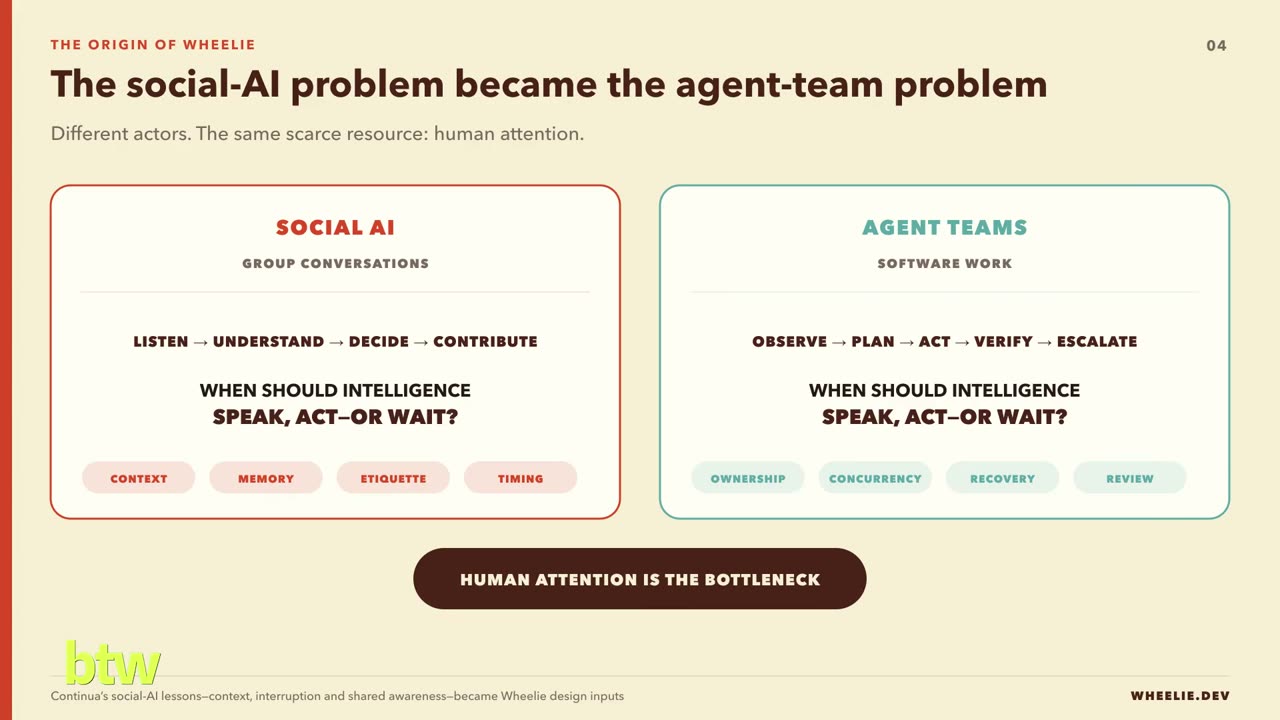
The real bottleneck in agentic coding is not token cost but human attention: the more agents a developer or team runs, the harder it gets to keep track of what they are doing and to communicate about it. That is the argument David Petrou, CEO of Continua, made on Episode 51 of Built This Week. His answer is Wheelie, an agentic development operating system that splits up the work, picks how many agents to run and decides when to interrupt which developer.
David has a PhD from Carnegie Mellon and spent almost eighteen years at Google. He describes his career there as serial entrepreneurship: come up with an idea, build the prototype, evangelize it, get a team, launch, repeat. He was on the founding teams of Google Glass and of Google Goggles, which he calls the world's first universal mobile visual search engine and the precursor to Google Lens. He credits his father, an inventor with many patents, for that habit.
Around the COVID years he saw what was happening inside Google, and then the world saw ChatGPT in November 2022. About three to three and a half years ago he decided it was time to see how fast he could run on his own. Leaving a company with near infinite resources felt like staring into the abyss, he says, but it came with a clear calendar, freedom to partner with anyone and no overhead on decisions. More on his background is on his guest page.

Watch David Petrou explain Wheelie in Episode 51 (starts at 9:04) · Episode 51 notes and transcript
Continua's first product was what David calls social AI. Chatbots work in single player mode, but people work in groups, so Continua put an AI into the places people already talk, like WhatsApp, iMessage, Slack and Telegram, with the social sense to know when to respond, when to hang back and when to take notes. He says they saw many magical moments with it.
Then, around September 2025, coding agents got good enough to work somewhat autonomously. The team skipped the editor autocomplete phase and went straight to agentic coding harnesses, including one from pi.dev. They put an API on top of every dashboard at Continua, covering costs, users, monthly actives and retention, so a horde of agents could run business intelligence analyses overnight and watch the logs. David calls it the classic Silicon Valley story: you set out to build A, build B along the way, and B turns out to be the bigger opportunity.
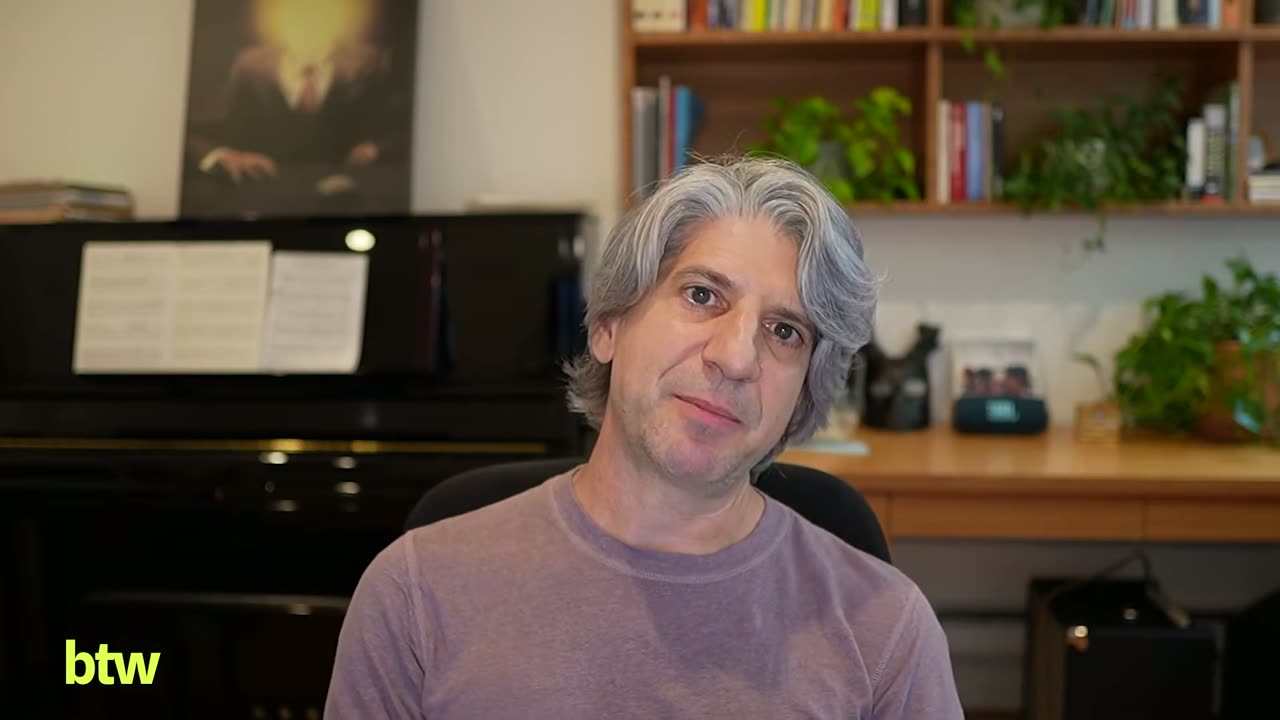
David says the archetypal user is a solopreneur, a prosumer, or the CTO of a small to medium company. Anyone who has used a coding agent in a terminal knows the progression: you type and wait thirty seconds, then the agent runs for longer stretches, then you open two windows, then four. At that point developers get exhausted trying to hold all of that state in their heads. Sub agents and plan mode help, he says, but they all have problems.
Token costs are continuing to go down, but what's not improving is the availability of, the human attention span.
— David Petrou, Episode 51
He has seen teams skip a proper postmortem after a production failure because it is faster to fix and roll forward than to tell anyone what happened. Wheelie's job is to get the right information to the right developer at the right time, so people are not exhausted and token spend is put to good use. You state a problem, and Wheelie decomposes it, chooses the number of agents, decides where they run and when to ask you a question. It knows your time zone and your coworkers', so a production issue at night can go to someone who is still awake. Wheelie is waitlist only for now, and the team onboards users by hand.
David calls it opinionated, because much of today's tooling was built for the shape of human attention:
Think about Git. Think about GitHub. If you were to design source control from scratch in an agent first world, you wouldn't do it that way.
— David Petrou, Episode 51
Jordan read it as an umbrella over a whole development system rather than a replacement for each developer's tools. David says Wheelie runs on foundation models plus some fine tunes of its own, and you would not be using Claude Code or Codex directly. It targets the middle ground between developers who want low-level tools and people who would use Lovable.
David named two: modernizing existing software, such as code that needs to move to the cloud or clunky systems that need a better front end, and greenfield projects where a company wants to see how far agentic coding goes without old dependencies. His larger point is that the SDKs and libraries built for human developers do not always make sense now.
React's great if you're a person and a human. It also is incredibly bloated and can be slow.
— David Petrou, Episode 51
An agent can cut through those layers and build bespoke front ends that are faster, with less bloat and less third-party code, he says.
In the news segment, Sam asked about Apple's first foldable iPhone. David, who calls himself a Pixel guy, thinks Apple's unified memory architecture puts it in a strong position to run AI on the device, which is good for privacy and latency. The problem is openness. On Android, he says, the OS could run the Uber and Lyft apps off screen, read them, and simply show you the cheapest ride. That will not be possible on Apple anytime soon, so he can see things shifting toward Android.
Jordan wondered whether a double-wide screen becomes a new computing interface. David was not sure the extra space is needed when developers increasingly work in natural language, and Jordan added that voice may make even the keyboard disappear.
On the new Fable 5.1 release, Sam had heard it writes better and costs less, and Jordan had not seen a difference on small coding tasks. David says 5.1 fixes Fable 5's loquacious, sometimes oblique language, but on cost versus quality he pointed to Gemini 3.8 Flash and Chinese models like DeepSeek, which give more tokens per dollar. Then, he says, it comes down to the harness: how it manages memory and decomposes large problems.
He expects models, harnesses and possibly programming languages to evolve together. At Continua, formal verification such as TLA+ has been useful at specific seams: places prone to concurrency bugs and API boundaries where clients talk to servers. Today a Go program and the formal statement of what it should do are separate things. A language that merges the two would be hard for a human, he says, but not so hard for an agent. We talked about where multi-agent work is going in Episode 30. Wheelie's waitlist is at wheelie.dev.
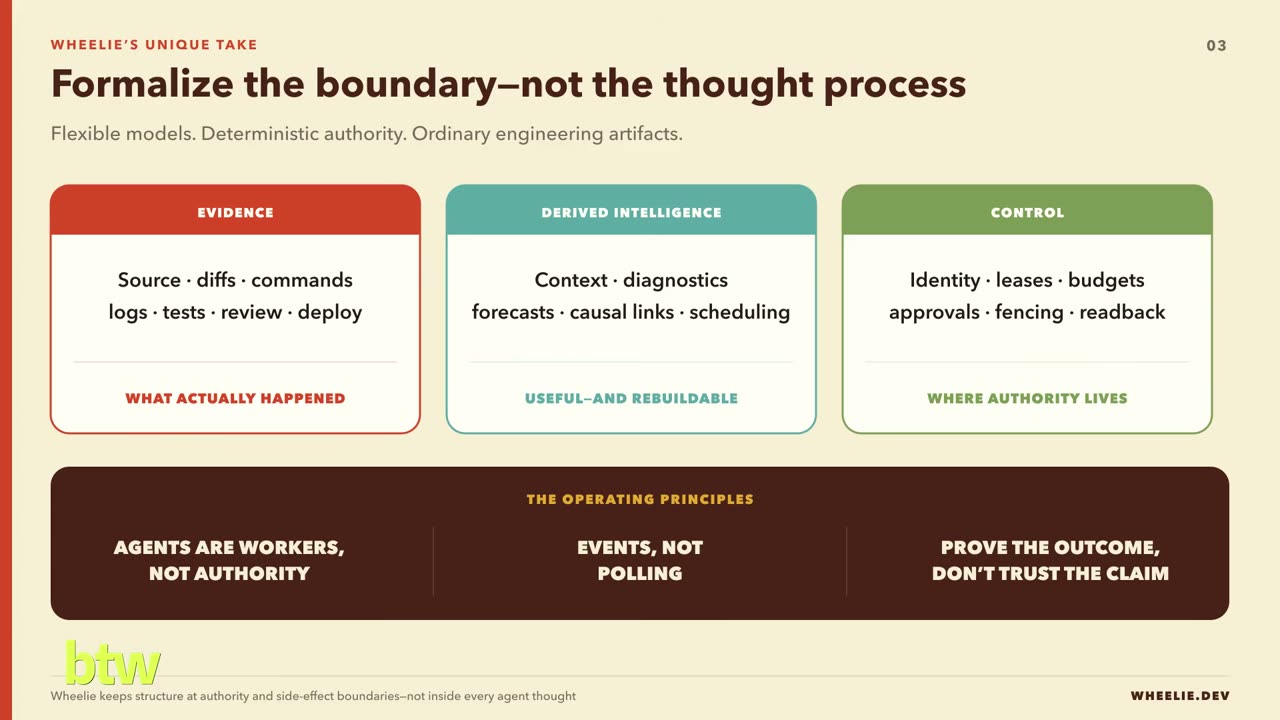
David covers Continua's pivot, how Wheelie routes work across a team and his case for agent-first programming languages on camera. Watch Episode 51 of Built This Week, where the full transcript is also on the page.