Jordan built an AI tool in Replit that reads a grocery receipt and writes 11 Mediterranean recipes. Plus Sam's Nano Banana workflow for product photos.

You can turn a grocery receipt into a week of recipes by giving a screenshot to an AI tool that pulls out the ingredients and writes meals around them. On Episode 12 of Built This Week, Jordan Metzner demoed Ryz Chef, a tool he built in Replit that read his Whole Foods order and returned 11 Mediterranean recipes: three each for breakfast, lunch and dinner, plus two desserts. Sam Nadler also showed how he uses Nano Banana in Google AI Studio to make product photos for an ecommerce store.
Jordan says he likes to cook, especially dinner, and gets bored making the same things from the same groceries every week. He also thinks AI will help people as their diets change with age and new dietary restrictions. So he built Ryz Chef, a tool aimed at the Mediterranean diet, his favorite style of eating.
The flow is simple. You paste a copy of your receipt from the supermarket, Instacart, Amazon or wherever you shop. The tool uses AI to extract the items, and Jordan's screenshot came back as tahini, carrots, pineapple chunks, chicken breast, strawberries and the rest of his order. You can add items it missed, then click to generate Mediterranean recipes.

Watch Jordan on prompting AI for better recipes in Episode 12 (starts at 7:45) · Episode 12 notes and transcript
Yes, Jordan says, and it does a pretty good job of identifying what is inside. The problem was his own fridge has drawers, so he needed four or five pictures to capture every item. A receipt turned out to be easier.
He shops at Whole Foods and scans his Amazon QR code at checkout, so even in-store orders get saved in his Amazon order history. That gives him a clean list to screenshot. He does the same with Instacart orders.
From one order, the tool built 11 recipes. For breakfast it suggested a tahini pineapple breakfast bowl, which Jordan had never heard of, a dark almond chocolate pineapple parfait and a strawberry peach toast on baguette. For dinner there was a tahini chicken carrot stir fry: saute chicken breast until golden, add baby carrots, cook until tender, then stir in tahini and cilantro. Desserts included strawberries dipped in melted dark chocolate.
It was not perfect. The toast called for a "Mediterranean bar," which Jordan read as a typo pulled from the salad bar item on his receipt. Overall he thought the recipes were well done. He also added PDF export, filtering and a layout that works on mobile.
Sam liked the idea of pairing it with the way he already uses ChatGPT to track calories:
I think combining that, my fitness tracker, calorie counter with these recipes based on the diet I like and the actual food I have, is a really powerful combination.
— Sam Nadler, Episode 12
His question was how Jordan kept the AI from combining random ingredients. Jordan couldn't recall his exact original prompt, but says he framed it as a high-end professional chef cooking Mediterranean meals with olive oil, and steered it away from dishes heavy in butter and fat.
I really just try to focus on healthy Mediterranean diet and creativity in the kitchen.
— Jordan Metzner, Episode 12
He sees plenty of room to extend the prompt. You could name a chef you love for more creative instructions, or ask for kids' meals built around their favorite and least favorite foods. A family where one person avoids gluten, another needs low salt and a third is cutting sugar could get recipes that meet everyone's requirements from the same shopping list. Jordan also imagines adding calories, macros and protein, and closing the loop by telling you what to reorder next time.
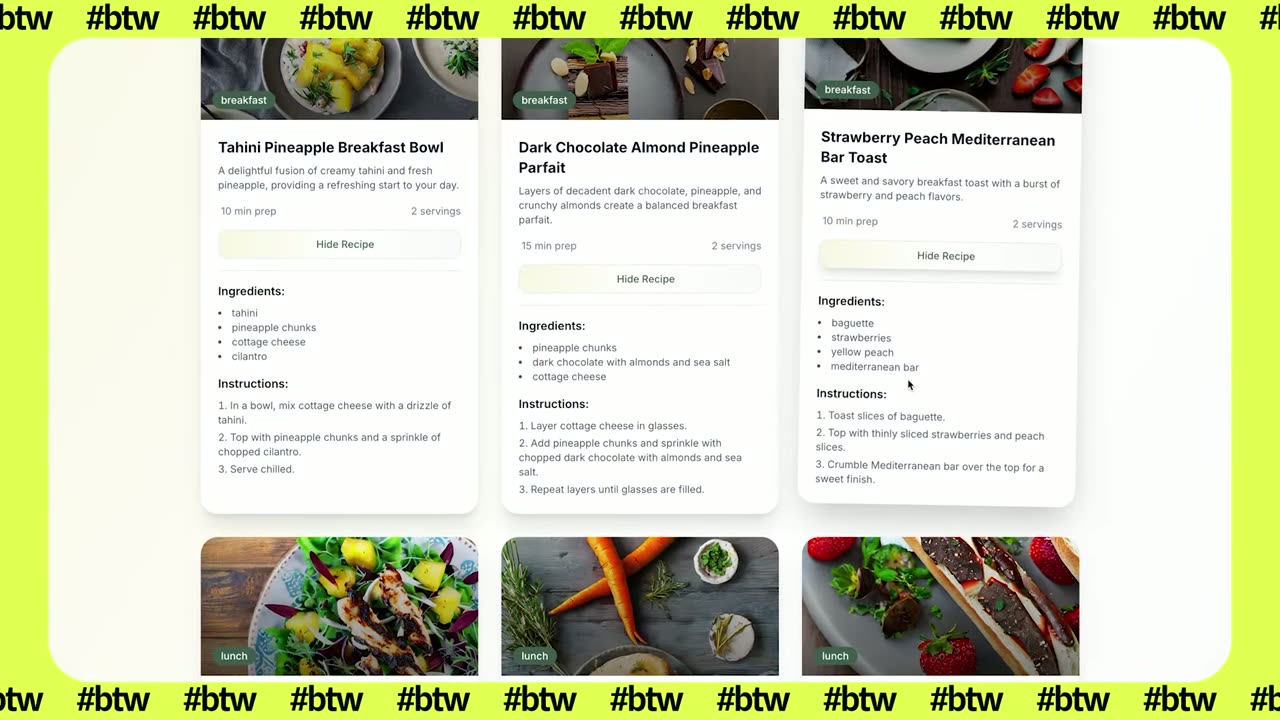
Jordan first used AI to generate a picture of each meal. He gave two reasons for dropping it: it was a little expensive and slow, and the AI wasn't good at picturing dishes that may not exist yet. He switched to Unsplash, an open library of images, and found good photos even for combinations like carrot and tahini.
Recipes default to two servings. Jordan says scaling servings would be a natural next feature if you wanted to cook for a party. He built the tool mostly for fun and for the show.
Sam's project is a small online store he is building with his daughter. Each semester they start a little business together: it is a way to connect, to learn some tools early and to build an entrepreneurial spirit, and all proceeds go to an orphanage they support. This time they 3D print small charms to decorate hoodies, and they planned to launch in about three weeks.
Every image on the site is AI generated. Sam photographs a printed charm, uploads it to Nano Banana in Google AI Studio, and prompts it to add the charms to a hoodie in a given color. Then he prompts again to place the hoodie on a model with specific clothes and shoes. He says it very rarely needs a second try, and each image takes minutes.
I think the images are extremely high quality.
— Sam Nadler, Episode 12
In the banner image some charms came out far too big, but Sam likes that because it makes it obvious what the store sells. The full workflow is on the hoodie charm product images build page, and we covered how we 3D print the charms in Episode 13.
In the news segment, Jordan reported that Replit raised about $250 million at a $3 billion valuation, with revenue that had grown to around $150 million. He built Ryz Chef in Replit and uses it often, mainly for its built-in database and authentication, which make it easy to build things.
Sam called it a huge round and a huge valuation, but said Replit is probably his least favorite vibe coding tool. His takeaway was that there is a vibe coding tool for everyone.
Jordan walks through the receipt upload, the generated recipes and the PDF export on screen, and Sam shows his Nano Banana prompts step by step. Watch Episode 12 of Built This Week, where the full transcript is also on the page.