Bito CEO Amar Goel on why Cursor and Claude Code struggle in big legacy codebases, and how an AI code review gate speeds up PR merges for enterprise teams.

AI coding tools like Cursor and Claude Code are great at building new projects, but they struggle to review changes inside large legacy codebases, and that gap is why enterprises need a dedicated AI code review step before code reaches production. That is the case Amar Goel, CEO of Bito, made on Episode 23 of Built This Week. Bito, based in Menlo Park, builds AI agents for developers centered on deep codebase understanding, starting with a code review agent.
Bito did not have a formal Slack integration yet, so Jordan built a Bito Slack bot prototype in Google AI Studio. A basic prompt about a bot agent for Slack got him an app that imitates the Slack interface. Typing "Bito help" lists the commands: review code, run tests, explain, last, stats, fun and surprise.
"Bito last" pulled up a review of his last pull request, a dark mode toggle, and showed it failed because of a critical security bug. The fun commands told a developer joke, wrote a haiku about pushing to main, and played disco music. Amar joked that it should go to production right away, and said customers have asked for exactly this kind of thing: Slack notifications when a review finishes, or a heads-up to the reviewer about what Bito found.

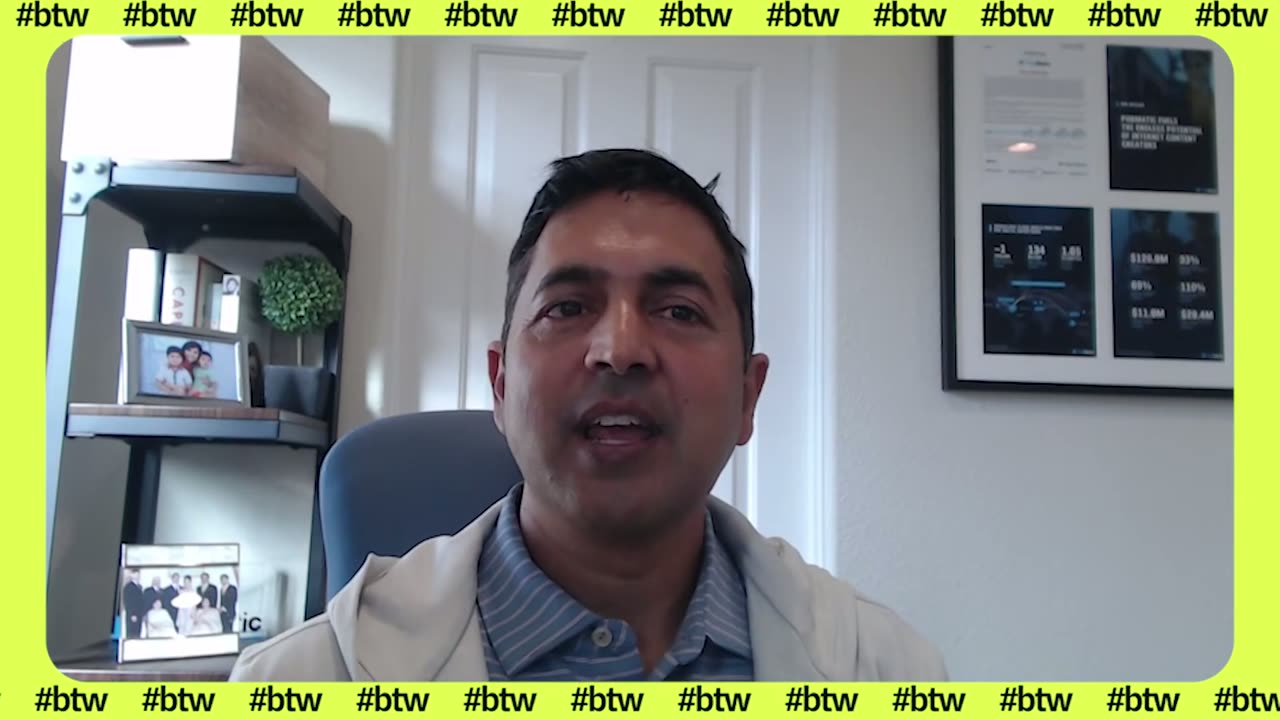
Watch Amar Goel on AI code review for large codebases in Episode 23 (starts at 5:54) · Episode 23 notes and transcript
Amar says everyone uses tools like Cursor, Claude Code, Codex and Copilot, and they excel at vibe coding. When you build something new they work almost in one shot. The trouble starts in older code.
But when I start to get into my existing kinda gnarly code base that's been built for five, ten, twenty years, and I have millions of lines of code and hundreds of repos and different services, all of a sudden, tools start to kind of break down.
— Amar Goel, Episode 23
Bito's first agent is code review in GitHub, GitLab and Bitbucket. It builds symbol indexes and abstract syntax trees to understand how the codebase and its services connect. Amar says teams tell him the reviews find deeper issues than asking a coding tool to review its own code: performance, security, scalability and logic problems. You can learn more at bito.ai.

Jordan summed up the problem as he sees it: coding tools can check what you or the AI just wrote, but not how well it fits the whole codebase. Amar agreed and added that Bito's review also runs inside Cursor, Windsurf, Claude Code, VS Code and JetBrains. Because it understands the whole codebase, it can skip noise, such as flagging missing error handling that is already handled upstream, and catch real risks, such as a change to one service breaking another service that calls it. For a simple vibe coded project, he says Bito is probably not necessary. In an enterprise, it works as a quality gate.
He gave two more reasons. Large companies now run a mix of tools, so nobody can be sure everyone reviewed their code locally. And the volume of code is going up so fast that some teams told him PRs are so big that reviews take days.
And also when a bug gets into production, the developer a lot of times didn't even write the code. So nobody really knows what's going on anymore.
— Amar Goel, Episode 23
Sam asked about the trade-off between quality and speed. Amar says it speeds teams up, and gave Bito's numbers:
So a PR that used to take fifty hours to merge is now merging in five to seven hours because most enterprise teams still have one or two people who manually go and review a PR.
— Amar Goel, Episode 23
He says Bito's agent returns feedback in about five minutes, where developers used to wait half a day or more. The developer fixes the basics, and the senior reviewer can focus on architecture and design instead of reading line by line. By his account, Bito provides about 75% to 80% of the feedback a PR receives, and customers have seen reverted PRs in the following month fall by about 55%. He put it down to the agent not getting tired.

Yes, Amar says. Teams can add custom rules and guidelines. Some want the agent noisier because it helps junior developers learn. Others only want production-level issues, which Bito calls essential mode. The agent also looks at the team's past review discussions and learns which flags the team ignores.
That last part has a twist. Amar says engineering leaders often want something different from what their team actually does. Some tell Bito to ignore the team's habits and enforce the standard every time, while others want the agent to learn from the team and adjust. Jordan suggested strictness could even vary by repo or by how senior the developer is.
In the news segment, Sam covered reports that Sam Altman had declared a code red to focus on ChatGPT, which he read as a response to Google's progress with Gemini. Amar's view:
For a long time, I've kind of felt like OpenAI went too broad too fast.
— Amar Goel, Episode 23
He says OpenAI spread into voice, video, image, coding, consumer and API at once, which left room on its flanks: Anthropic took the lead in coding and is strong at writing. He did not find Gemini 3 groundbreaking, but he now uses it alongside ChatGPT and Claude, and he thinks Google's distribution and ad model are the bigger threat. Jordan pointed to Nano Banana for images and Veo 3.1 for video, and to Gemini's place inside Docs, Slides and Gmail. His bigger worry for OpenAI is that Google can afford to give products away and lose money for longer.
After a discussion of Amazon's new Trainium 3 chip, where Amar said Nvidia still leads for training while others catch up on inference, the talk turned to money. Amar sees a paradox: every chip and model provider says demand far exceeds supply, and Bito itself, using billions of tokens a day, has been told capacity is limited. Yet he estimates AI revenue at perhaps $40 to $50 billion a year against roughly $400 billion of infrastructure spend.
He compared it to the late 1990s, when servers were scarce and precious. On the IBM CEO's argument that the math does not work, Amar repeated the article's point that $8 trillion of capex would need $800 billion of profit just to cover interest. He suggested other labs show you may not need to spend that much to train strong models. We looked at the cost side of running models in Episode 37.
Amar walks through how Bito reviews code, why teams want a formal gate, and his take on the OpenAI and Google race in more detail on camera. Watch Episode 23 of Built This Week, where the full transcript is also on the page.