Juma CEO Iliya Valchanov on going from a seven-person marketing team to one, AI for SEO and ads, and why Claude Code beat Cursor and Codex for his team.

An AI marketing agent can let one person do the work a whole sales and marketing team used to do, if the company uses it to raise quality rather than just save time. That is the case Iliya Valchanov, co-founder and CEO of Juma, made on Episode 35 of Built This Week. Juma is a super agent for marketing tasks that plans and executes work like content creation, performance marketing, ads, images and carousels.
Iliya says it did at Juma. The team started by trying to automate every marketing activity it did, and the result surprised even him.
We used to be seven people. So we had seven people in sales and marketing. Now we have one. And we're doing more work than before.
— Iliya Valchanov, Episode 35
Some of the gain is speed. Juma integrates with Webflow, and Iliya says an article can now be written and published from beginning to end with no supervision in a few minutes. But he says the bigger change is work that wasn't possible before, like full reports built from Google Analytics and Google Ads data that show who is converting and what is working. In his view no agency does this well, let alone a marketing team of two or three people.
Juma works inside projects that keep memory of past work, and it has connectors to Google Analytics, HubSpot, Google Search Console, Google Ads and Meta Ads. A newer Instagram connector is meant to let a project learn what it posted and how it performed. Its main users are marketing agencies, then in-house marketing teams, then solopreneurs and founders who have a project but don't know how to market it.
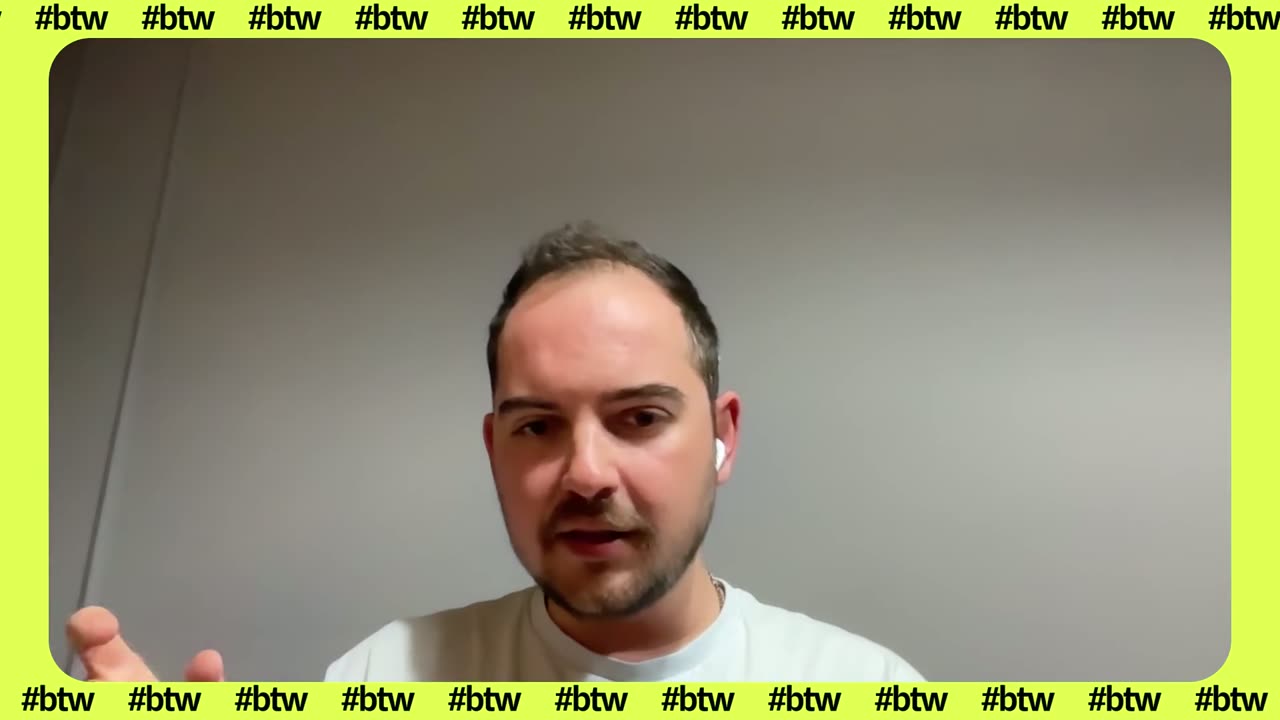
Iliya says the return looks different by customer. Large agencies measure it in billable hours: every repetitive hour Juma removes is money they make. For small teams it is less about time saved and more about being able to chase every idea they have.

Watch Iliya Valchanov on AI agents for SEO and ads in Episode 35 (starts at 11:26) · Episode 35 notes and transcript
Jordan suggested AI lets marketers run more creative and more A/B tests without leaning on a design team. Iliya went further: he says AI redefines whole workflows. Keyword research for SEO or GEO used to be a specialist job. Now Juma connects to an Ahrefs or Semrush MCP and the agent does it, turning a long activity into about a minute of work.
Ads are where Juma chose to focus its data work. Iliya's reasoning is that companies spend a lot of money on ads, so each small optimization matters more than it does for content. That is why the team doubled down on pulling data from Google Analytics, Google Ads and Meta Ads to give marketers better intelligence about those systems. We talked about our own approach to AI-driven SEO in Episode 2, and more examples live on our AI in marketing page.
Iliya gave three. The first is that the point of AI is quality, not speed.
So the first thing is it's not about doing stuff faster. It's about doing stuff better.
— Iliya Valchanov, Episode 35
He calls "save time" a big misconception. The best users of AI save time so they can increase quality. The second lesson is that coders and marketers are leading adoption, with operations people close behind and other professionals less excited. The third is that every company going through AI transformation needs one person to lead it. Without that, whether the company has five people or 500, he says it fails, because it treats AI as buying tools when it is really change management and rethinking workflows.

Jordan agreed that quality is the key variable, and added that agents can run all night while he sometimes runs out of work to give them. Iliya says people who claim to run 50 agents can't process that output. He runs no more than three at once, because by the time he gives the third one its context, the first is done. Jordan and Sam said they feel the same.
Iliya's team moved from Cursor to Claude Code, and canceled Cursor the week before the recording. They test Codex from time to time, but nobody wants to move. He says the gap between Cursor and Claude Code was big enough to switch on purpose, and the gap to Codex isn't.
Jordan went the other way. He says Claude Code is the more enjoyable tool and does a good job of keeping you entertained while the agent works. But after trying Codex 5.3, and now 5.4 on extra high, he saw significantly better code quality, even though Codex is slower and less fun to use.
One thing I would notice like repetitively with Claude Code is that it would make mistakes, but be confident that there were no mistakes.
— Jordan Metzner, Episode 35
Sam still uses both about 50/50. Jordan lets his developers pick their favorite tool, and some still prefer Claude Code. His rule is to use whatever the best model of the day is. What could pull the team toward one ecosystem, he says, is how well each handles PRs running in the background. We compare the two in more depth on our Claude Code vs OpenAI Codex page and covered the Codex 5.3 release in Episode 30.

Jordan pointed out that both Claude Code and Codex are built as apps that don't put the code in front of you, and it seems nobody is reading it anymore. Iliya says Juma tracks this. Each person on the team has a coefficient for how much of the code they read, and it varies a lot from person to person and over time. The clear trend is toward reading less.
Instead of reading more code, Juma spun up four more environments of its software and puts PRs on them to test. Iliya says it mattered more to have places to see what the agents are doing to the product than to read the code. Jordan thinks it comes down to developer trust, and that the best developers still stand out because they can direct more agents on harder work. He also asked an open question: if people now write in plain English, how much does learning Python and for loops in a computer science degree still matter?
The last news story was Andrej Karpathy's open source auto research tool on GitHub. Jordan says it trains in five-minute increments, so you can start a run, work on something else, then check results and iterate many times a day. Iliya, whose earlier company taught people how to train AI models, read the repo and says it is small and stripped to the essence. He sees it as a blueprint for running experiments at a scale and cost never seen before.
That connects to something a friend told Iliya: his website said the same thing every time the page loaded, when it could be testing every word on every page. Iliya first thought that sounded like overkill, but now it is cheap enough to try, and he says it turns every website into a living thing. Jordan was more skeptical. From his time at Amazon, he remembers many tests, like changes to the design of star ratings, where the result often didn't matter. Google has barely changed its homepage and has done fine. He thinks e-commerce is where constant testing makes most sense, because checkout gives a clear feedback loop, while B2B buyers take longer to decide.
Iliya also shows Juma building a social media calendar and an Instagram carousel from one prompt. You can learn more about Juma at juma.ai. Watch Episode 35 of Built This Week, where the full transcript is also on the page.